
UChicago Medicine Faculty Physicians
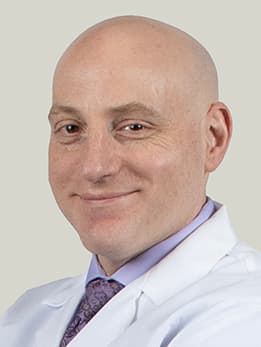
Ryan Merkow, MD, MS
Ryan Merkow, MD, MS
UChicago Medicine Faculty Physicians
Associate Professor of Surgery
Vice Chair, Quality and Safety
Associate Chief Quality Officer for Perioperative Services, UChicago Medicine Health System
Director, Surgical Cancer Quality and Informatics, University of Chicago Medicine Comprehensive Cancer Center
Associate Director, Surgical Implementation and Health Services Research (SIHSR) Center
Specialties
- Surgical Oncology
- Gastrointestinal Surgery (GI Surgery)
- General Surgery
Locations
- Chicago - Hyde Park
- Northbrook
- About
- Specialties & Areas of Expertise
- Locations & Patient Information
- Education & Research
- Accepted Insurance
- External Professional Relationships
Meet Dr. Merkow
In order to provide his patients with the best solution(s), Dr. Merkow offers both nonsurgical and surgical options. His treatments include regional cancer therapies, such as hepatic artery infusion (HAI) pump chemotherapy, a technique that supplies high doses of chemotherapy directly to the liver. This therapy is used to kill any remaining cancer cells after visible tumors have been surgically removed, as well as to convert someone from unresectable (all tumors cannot be removed) to resectable (all tumors are able to be cleared from the liver). He also provides other liver directed therapies, such as ablation, designed to selectively target liver tumors without injuring nearby healthy tissue, and histotripsy, a non-invasive procedure that uses sound waves to treat liver tumors.
In addition to regional therapies, Dr. Merkow performs minimally invasive and robotic surgery to treat cancer, offering accuracy and precision while removing life-threatening tumors. This allows his patients to recovery faster with less pain and scarring so they can get back to their daily lives sooner.
Along with his dedication to his clinical practice, Dr. Merkow is passionate about advancing treatment through clinical research and making surgery and cancer care delivery safer, more efficient and patient-centered. His research focuses primarily on surgical outcomes, quality improvement and patient safety, which has been published in over 150 peer-reviewed articles in highly respected, medical journals, like the Journal of the American Medical Association (JAMA), Journal of the National Cancer Institute (JNCI), British Journal of Quality and Patient Safety, Annals of Surgery, Annals of Surgical Oncology and more. With his research expertise, Dr. Merkow will join the University of Chicago’s Health Services Research Center.
Dr. Merkow is active, and has held leadership roles, in several national healthcare organizations, including serving as chair of the Association for Academic Surgery Clinical and Health Services Research Committee. Additionally, with healthcare constantly evolving, he provides clinical training to medical students, residents and fellows, mentoring them as they embark on their medical careers.
Specialties
- Surgical Oncology
- Gastrointestinal Surgery (GI Surgery)
- General Surgery
Areas of Expertise
- Colorectal Cancer
- Gastrointestinal Cancers
- Hyperthermic Intraperitoneal Chemotherapy (HIPEC)
- Minimally Invasive Surgery
- Robotic Surgery
- Appendix Cancer
- Bile Duct Cancer
- Liver Cancer
- Pancreatic Cancer
- Pancreatic Cystic Neoplasms
- Pancreatic Surgery
- Peritoneal Cancer
- Regional Cancer Therapy
- Stomach Cancer
- Whipple Procedure
- Histotripsy
UChicago Medicine Duchossois Center for Advanced Medicine - Hyde Park5758 S. Maryland Ave., Chicago IL 606371-888-824-0200
Board Certifications
- Complex General Surgical Oncology
- Surgery
Languages Spoken
- English
Medical Education
- University of Colorado School of Medicine
Residency
- University of Chicago Hospitals; University of Colorado Hospitals
Fellowship
- Memorial Sloan-Kettering Cancer Ctr.
Memberships & Medical Societies
- American College of Surgeons
- Americas Hepato-Pancreato-Biliary Association
- Association for Academic Surgery
- Society for Surgery of the Alimentary Tract
- Society of Surgical Oncology
News & Research
Insurance
- Aetna Better Health *see insurance page
- Aetna HMO (specialists only)
- Aetna Medicare Advantage HMO & PPO
- Aetna POS
- Aetna PPO
- BCBS Blue Precision HMO (specialists only)
- BCBS HMO (HMOI) (specialists only)
- BCBS Medicare Advantage HMO & PPO
- BCBS PPO
- Cigna HMO
- Cigna POS
- Cigna PPO
- CountyCare *see insurance page
- Humana Medicare Advantage Choice PPO
- Humana Medicare Advantage Gold Choice PFFS
- Humana Medicare Advantage Gold Plus HMO
- Medicare
- Multiplan PPO
- PHCS PPO
- United Choice Plus POS/PPO
- United Choice HMO (specialists only)
- United Options (PPO)
- United Select (HMO & EPO) (specialists only)
- United W500 Emergent Wrap
- University of Chicago Health Plan (UCHP)
Our list of accepted insurance providers is subject to change at any time. You should contact your insurance company to confirm UChicago Medicine participates in their network before scheduling your appointment. If your insurance company is not listed here, or if you have any other questions, please contact Managed.Care@uchospitals.edu.
*Click Here to visit our insurance page and learn more.
UChicago Medicine is committed to fostering a corporate culture of ethical behavior and integrity in all matters related to compliance with the laws and regulations that govern the delivery of healthcare. This aspiration is central to supporting patient care, research, and teaching at UChicago Medicine.
Some of our physicians and health professionals collaborate with external pharmaceutical, medical device, or other medical related entities to develop new treatments and products to improve clinical outcomes for patients. In some instances, the physician has ownership interests in the external entity and/or is compensated for advising or speaking about the entity’s products or treatments. These payments may include compensation for consulting and speaking engagements, equity, and/or royalties for products invented by our physicians. To assure objectivity and integrity in patient care, UChicago Medicine requires all physicians and health professionals to report their relationships and financial interests with external entities on an annual basis. This information is used to review relationships and transactions that might give rise to potential financial conflicts of interest, and when considered to be significant a management plan to mitigate any biases is created.
If you are a patient at UChicago Medicine and would like more information about your physician’s external relationships, please talk with your physician. You may also visit the Centers for Medicare & Medicaid Services (CMS) Open Payments website at https://openpaymentsdata.cms.gov/ . CMS Open Payments is a national disclosure program that promotes a more transparent and accountable health care system. It houses a publicly accessible database of payments that reporting entities, including drug and medical device companies, make to covered recipients like physicians and hospitals.
Information in the CMS Open Payments database could potentially contain inaccurately reported and out of date payment information. All information is open to personal interpretation, if there are questions about the data, patients and their advocates should speak directly to their health care provider for a better understanding.
Some of our physicians and health professionals collaborate with external pharmaceutical, medical device, or other medical related entities to develop new treatments and products to improve clinical outcomes for patients. In some instances, the physician has ownership interests in the external entity and/or is compensated for advising or speaking about the entity’s products or treatments. These payments may include compensation for consulting and speaking engagements, equity, and/or royalties for products invented by our physicians. To assure objectivity and integrity in patient care, UChicago Medicine requires all physicians and health professionals to report their relationships and financial interests with external entities on an annual basis. This information is used to review relationships and transactions that might give rise to potential financial conflicts of interest, and when considered to be significant a management plan to mitigate any biases is created.
If you are a patient at UChicago Medicine and would like more information about your physician’s external relationships, please talk with your physician. You may also visit the Centers for Medicare & Medicaid Services (CMS) Open Payments website at https://openpaymentsdata.cms.gov/ . CMS Open Payments is a national disclosure program that promotes a more transparent and accountable health care system. It houses a publicly accessible database of payments that reporting entities, including drug and medical device companies, make to covered recipients like physicians and hospitals.
Information in the CMS Open Payments database could potentially contain inaccurately reported and out of date payment information. All information is open to personal interpretation, if there are questions about the data, patients and their advocates should speak directly to their health care provider for a better understanding.
Ratings & Reviews (18)
4.9/5 81 RatingsHepatic Artery Infusion (HAI) Pump Chemotherapy for Liver Metastases
Hepatic artery infusion pump chemotherapy, or HAI, is an advanced treatment for tumors that have spread to the liver due to metastatic colorectal cancer or metastatic bile duct cancer. HAI is a powerful tool to shrink liver tumors and reduces the risk of tumor recurrence.
Hepatic Artery Infusion Pump Chemotherapy, or HAI, is an advanced treatment for tumors that have spread to the liver due to metastatic colorectal cancer or metastatic bile duct cancer. HAI is a powerful tool to shrink liver tumors and reduces the risk of tumor recurrence. The hepatic artery infusion pump is a wireless metal pump that is placed inside the abdominal wall during a surgical procedure. The device is about the size of a hockey puck. The pump is connected to the liver via a small tube placed into a blood vessel connected to the hepatic artery. The HAI device pumps high doses of chemotherapy directly into the liver-- as much as 300 to than intravenous chemotherapy. The high doses of medication remain in the liver as opposed to circulating through the body as in traditional therapy. Over time, tumors shrink or disappear. For patients who are not yet candidates for surgery to remove tumors, HAI can shrink tumors so they can be removed with surgery. For patients who have had liver tumors removed, HAI can reduce the risk of tumor recurrence. The UChicago Medicine Comprehensive Cancer Center is one of a select number of hospitals in the nation that offers this advanced treatment. We're also leaders in hepatic artery infusion research, and are actively conducting clinical trials, with the goal of making HAI available to more patients who may benefit. Learn more about hepatic artery infusion and request an appointment at UChicagoMedicine.org/hai. [MUSIC PLAYING]
What is the Whipple procedure?
Learn about the Whipple procedure, or pancreaticoduodenectomy, the most common surgery for removal of cancer of the pancreas.
[MUSIC PLAYING] Surgery may be an option for patients with pancreatic cancer. The Whipple procedure is the most common surgery to remove cancer in the pancreas. This is also called the pancreaticoduodenectomy. The goal of the Whipple surgical procedure is to remove an entire tumor in the head or neck of the pancreas. UChicago Medicine is one of few centers in the country that offer the Whipple procedure using both traditional open and robot-assisted techniques. An expert multi-disciplinary team of cancer doctors needs to go over every patient's case. The surgeon then discusses the risks and benefits with each patient to determine if the Whipple is right for them. During the procedure, the surgical team removes the head of the pancreas. Then they remove the first portion of the small intestine, or duodenum, gallbladder, part of the bile duct, and nearby lymph nodes. In some cases, a small part of the stomach and portions of the nearby artery and vein may also need to be removed. The final step is to reconnect the pancreas with the bile duct, stomach, and intestine so food can pass through the digestive system once again. UChicago Medicine works to enhance recovery so patients can go home as soon as possible. Depending on the type and stage of the tumor, patients may undergo outpatient chemotherapy before or after surgery, or both. Because the Whipple surgery is a complex procedure, it's important to be treated by a highly experienced surgical team. The American Cancer Society recommends patients have the Whipple operation at a hospital that does at least 15 to 20 of these surgeries per year. Surgeons at UChicago Medicine perform up to five times that many Whipple procedures annually. Want more information about pancreatic cancer and the Whipple procedure? UChicago Medicine is here to help.
Histotripsy: What It Is and How It Works
Histotripsy technology uses high-intensity sound waves to selectively destroy cancer tissue in the liver. Unlike traditional treatments such as surgery, radiation or ablation, the procedure does not require any incisions, radiation, needles or invasive procedures.
[MUSIC PLAYING] Histotripsy is a new, non-invasive technology that uses focused ultrasound waves to target and destroy cancer tissue in the liver. When the ultrasound waves are transmitted through the body and reach the targeted tissue, they cause vibrations that create high pressure. This pressure creates tiny, naturally-occurring gas bubbles known as microbubbles.
These microbubbles expand and collapse very quickly, forming a bubble cloud that moves through the targeted tissue directed by the histotripsy machine. The expansion, collapse, and vibrations make the cancer cells break apart completely. This destruction only happens inside the bubble cloud avoiding damage to tissue that is not targeted. Research indicates that important structures like blood vessels are strong enough to remain intact even as surrounding cancer tissue is destroyed.
[MUSIC PLAYING]
Unlike conventional therapies, histotripsy only uses mechanical forces rather than chemicals, surgery, or radiation to destroy cancer tissue. As a result, it doesn't create heat or ions that damage healthy DNA, and it preserves antigens-- molecules that help the immune system recognize any remaining cancer cells for cleanup.
When the cancer cells are destroyed, they leave behind a harmless liquid that gets absorbed and flushed out by the body's natural drainage systems. In weeks and months that follow, the volume of unwanted tissue shrinks. At UChicago Medicine, we have specialized equipment that allows physicians to combine their expertise with robotic precision to plan the ultrasonic wave treatment and monitor it in real time. The histotripsy procedure for removing liver tumors is completely non-invasive, offering the potential to transform the patient experience.
[MUSIC PLAYING]
These microbubbles expand and collapse very quickly, forming a bubble cloud that moves through the targeted tissue directed by the histotripsy machine. The expansion, collapse, and vibrations make the cancer cells break apart completely. This destruction only happens inside the bubble cloud avoiding damage to tissue that is not targeted. Research indicates that important structures like blood vessels are strong enough to remain intact even as surrounding cancer tissue is destroyed.
[MUSIC PLAYING]
Unlike conventional therapies, histotripsy only uses mechanical forces rather than chemicals, surgery, or radiation to destroy cancer tissue. As a result, it doesn't create heat or ions that damage healthy DNA, and it preserves antigens-- molecules that help the immune system recognize any remaining cancer cells for cleanup.
When the cancer cells are destroyed, they leave behind a harmless liquid that gets absorbed and flushed out by the body's natural drainage systems. In weeks and months that follow, the volume of unwanted tissue shrinks. At UChicago Medicine, we have specialized equipment that allows physicians to combine their expertise with robotic precision to plan the ultrasonic wave treatment and monitor it in real time. The histotripsy procedure for removing liver tumors is completely non-invasive, offering the potential to transform the patient experience.
[MUSIC PLAYING]